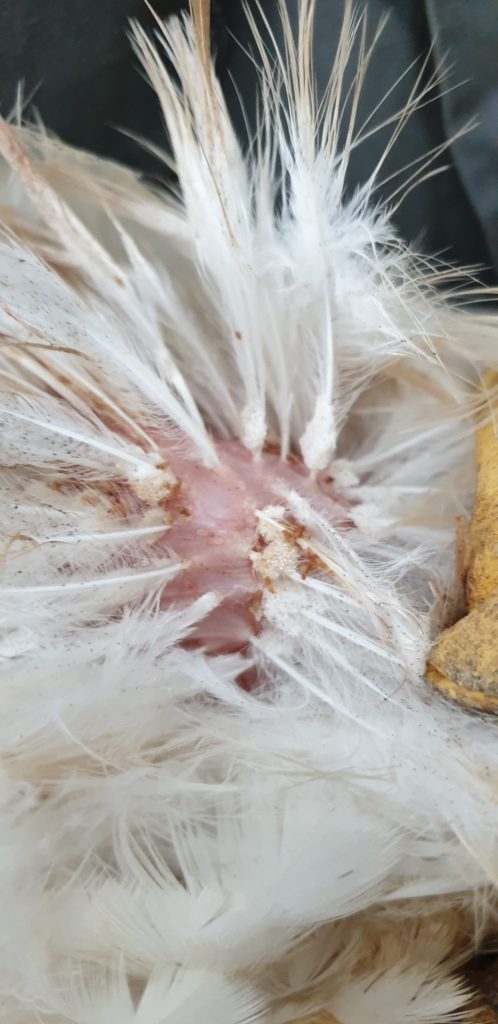
Lice and mites are common pests that affect chickens. They can be difficult to get rid of and can lead to major issues for the flock. Here are some treatment for lice & mites on chickens
Every 3-4 months chickens can be treated with maldison or pestene. If you find active lice or mites you should repeat the treatment in a week. Every change of season clean out the bedding, spray the pen with maldison, coopex or pirethrin. Dust with lime or staldren and replace bedding. Sprinkle the nesting box with pestene, DE or maldison powder so that when the girls sit in there to lay they are not laying into a bed of pest.
There are many different treatments available on the market that you can use to treat lice or mites in your chickens. You should always consult with a vet before using any treatment that does not follow the label and be sure to read the instructions carefully.

All of these pests irritate, cause them discomfort and sometimes premature death of your chicken flock. There are effective lice & mite treatments for chickens. Many unknown ailments in chickens that can be helped or cured by a good worm and lice treatment and we suggest that you do this every 3-4 months along with a complete pen clean. Read our separate post on worm treatments.
Red mite can infest your house and bite humans. Wild birds can carry lice and mites and steal your feed. Try to stop wild birds accessing your pen. Keeping a dust bathing area for your flock will help.
With all the humidity this year the population of lice and mites has increased dramatically and here are the ways that we suggest to treat your flock to make their life more comfortable.
Maldison 50:
is available as a powder (see poultry dust below) or liquid. The powder can be sprinkled on the chicken and dusted to the skin level of the chicken. This will kill the lice and mites on the chicken and we have found that it also seems to kill the lice eggs. Nil egg witholding.
The liquid Maldison 50, can be used at a low concentration on the chicken as a spray or a bath that they can be dipped into. Lice of Tropical Fowl Mite on birds: 500ml Maldison in 100L of water. Spray birds at a rate of 50L per 1000 birds.
At the stronger concentration and added to a sprayer this product can be sprayed into the pen and on the perches to eradicate the pests. Lice and mites in poultry houses: Mix 500ml Maldison in 25L of water to spray nesting boxes, litter and walls. Mix 500ml Maldison in 8L water to paint onto roosts. Repeat applications in 8-14 days to destroy lice hatching from eggs present at first treatment.
Poultry Dust:
David Grays Poultry Dust is great for the prevention and control of poultry parasites such as fleas, flies, ticks, ticks and mites. This poultry dust is applied between birds feathers, bird roosts and building crevices and is especially useful during those high-risk periods like summer time or as all season preventative. Active constituent: 20g/kg Maldison. NIL egg withholding
Pestene powder:
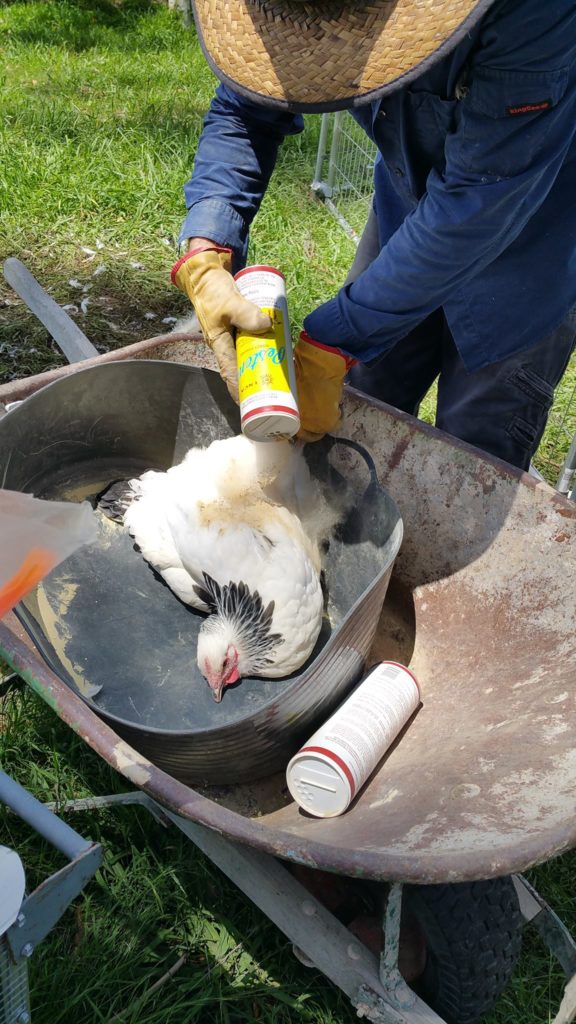
is effective against lice, mites and fleas in poultry, dogs, cats, horses, calves and goats. Composition: Sulfur 50 g/kg, rotenone 10 g/kg. Pestene can be dusted on the chickens and the perch and nesting box to treat lice and mites. Nil egg witholding.
Exholt:
Exholt Fluralaner Oral Solution for Chickens, is a break-though new product approved for use in poultry in Australia. New from MSD Animal Health, Exzolt is an innovative, easy-to-use, effective and safe parasiticide for chickens that eliminates 99%+ of Poultry Red Mites (D. Gallinae) and Northern Fowl Mites (O. Sylviarum) by systematically treating host birds via drinking water.
Staldren powder:
is a pen disinfectant powder that can be safely used in your pen in place of lime while the chickens are about as it will not burn their feet. This product reduces the smells in the pen as reduces ammonia levels and helps to reduce fly numbers. Staldren also treats red mites that may be in the litter of the pen. Pleasant smelling and helps with wet, damp pens.
Builders Lime:
can be used in pens under clean bedding. Care should be taken with amount and to cover as this can burn the feet of the flock Will help reduce smells in the pen.
Diatomaceous Earth:
can help control parasites, it can be added to dust baths and used on the chickens. Care must be taken to not have the chicken inhale the dust as it can be detrimental. Diatomaceous earth is not poisonous; it does not have to be eaten in order to be effective. Diatomaceous earth causes insects to dry out and die by absorbing the oils and fats from the cuticle of the insect’s exoskeleton. Its sharp edges are abrasive, speeding up the process. It remains effective as long as it is kept dry and undisturbed. If you use DE directly on the poultry and don’t get immediate results you will need to use pestene or maldison as a lice or mite infestation can stop your flock laying.
Dust baths:

help prevent parasites but they won’t deal with an existing infestation quickly enough – for that you’ll need to directly treat the flock. You can add cold wood ash to the dust bath area to also help the flock as it dusts.
Coopex:
Coopex can be sprayed in the pen, when the flock is out free ranging for the day. It will kill pests in the pen. Not to be used directly on the chickens.